


Polypropylene Bags: Types and Specificationstypes and specifications

The polypropylene bag is one of the most common types of industrial packaging in the world. It is lightweight, strong, and resistant to moisture and chemical influences. It is used for packing grain, sugar, flour, fertilizers, building materials, and dozens of other bulk products. In this article, we will analyze all types of PP bags, their technical specifications, and application areas.
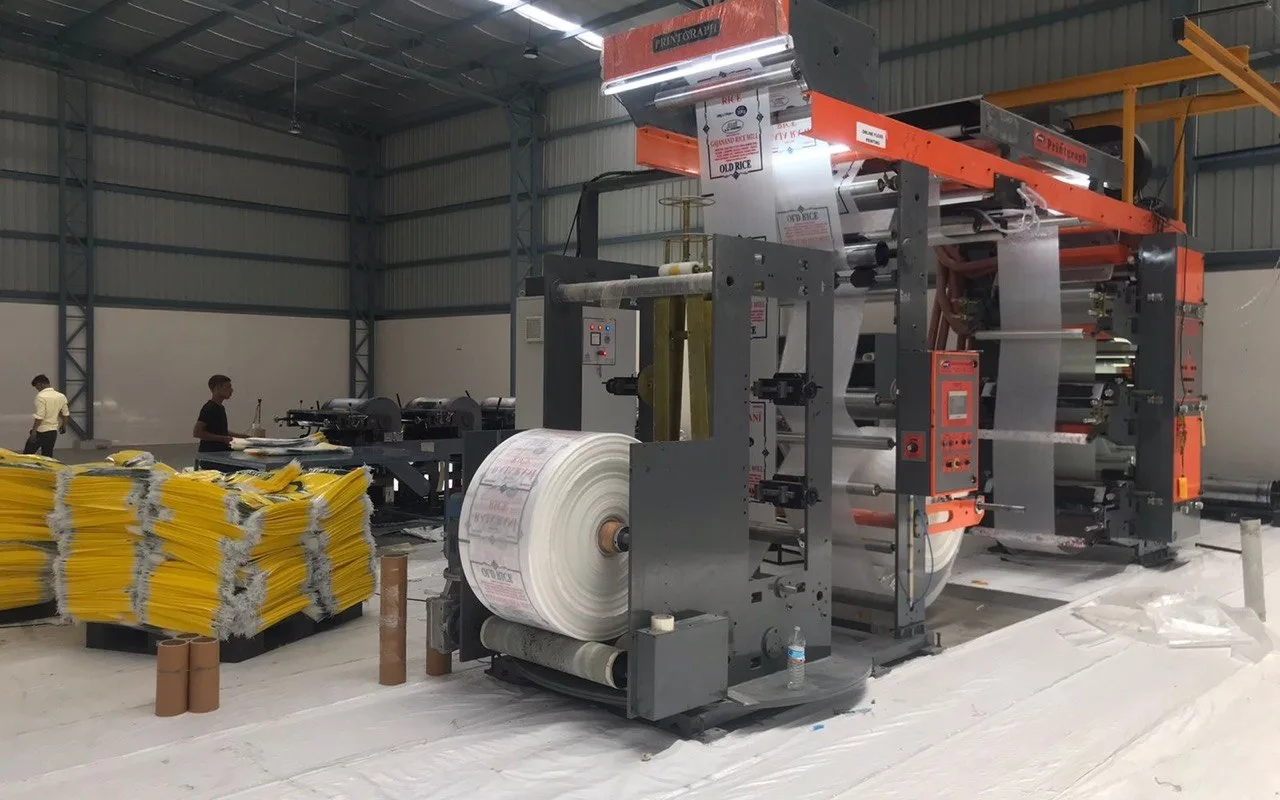
Classification by type
Standard white
Basic type without additional coating. Woven PP, open top or with a valve. The cheapest option for dry bulk materials.
Laminated
Outer layer of PP film: increased moisture protection, smooth surface for high-quality printing. 15–20% more expensive.
With PE liner
Inner polyethylene layer. For hygroscopic products: sugar, salt, chemical fertilizers. Hermetic moisture barrier.
With logo (printing)
Flexographic printing up to 4 colors. For branded products. Minimum order — from 1000 pcs. Laminated bags yield higher print quality.
Standard sizes of PP bags
| Capacity | Size (W×H) | Density | Typical application |
|---|---|---|---|
| 5 kg | 30 × 45 cm | 45–55 g/m² | Cereals, spices, seeds |
| 10 kg | 40 × 55 cm | 50–60 g/m² | Sugar, flour, salt |
| 25 kg | 50 × 75 cm | 55–70 g/m² | Fertilizers, compound feed, cement |
| 50 kg | 55 × 95 cm | 60–80 g/m² | Grain, building materials, sand |
| 50+ kg | 60 × 105 cm | 70–90 g/m² | Heavy bulk, industry |
Technical specifications
| Parameter | Value |
|---|---|
| Material | Woven polypropylene (PP) |
| Fabric density | 45–90 g/m² (depending on capacity) |
| Temperature resistance | −20°C … +120°C |
| Tensile strength (warp) | ≥ 500 N/5 cm |
| Tensile strength (weft) | ≥ 350 N/5 cm |
| UV stabilization | Yes (6–12 months of outdoor storage) |
| Non-toxicity | Approved for food products |
PP bags vs other packaging: comparison
| Criterion | PP bag | Paper | Jute |
|---|---|---|---|
| Moisture resistance | High | Low | Low |
| Strength | High | Medium | High |
| Tare weight | Light | Medium | Heavy |
| Price | Low | Medium | High |
| Logo printing | Yes (up to 4 colors) | Yes | Limited |
| Recycling | 100% (type 5 PP) | Yes | Composting |
| Food products | Yes | Yes | Limited |
Application areas
Frequently Asked Questions
Looking for a reliable supplier? UkrBagPak is a Ukrainian manufacturer since 2014. Buy big bags wholesale from the manufacturer directly, without intermediaries. 150+ FIBC models in stock: 2- and 4-loop, with valves, liners, from 500 to 3000 kg. ISO 21898 certified, 1-day shipping across Ukraine.
What is the difference between a laminated and a regular PP bag?
A laminated bag has an outer layer of PP film: it holds moisture better, has a smoother surface for printing, and a better appearance. It costs 15–20% more than a regular one.
Can PP bags be used for food products?
Yes, polypropylene is non-toxic. For direct contact with food products, a laminated bag or a bag with a PE liner is recommended for an additional hygienic barrier.
How many bags are in a bale?
Usually 500 or 1000 pieces depending on the size. Bags are supplied in compressed bales for convenient storage.
What is the minimum batch for bags with printing?
The minimum order for logo printing is usually from 1000 pieces (depends on the number of colors). For standard bags without printing — from 50 pieces.
In addition to polypropylene bags, we also manufacture large-format soft packaging — big bags wholesale direct from factory with load capacity from 500 to 3000 kg. You get factory pricing without the double markup from logistics and trading intermediaries.