


ISO 21898: All About Big Bag Certification

ISO 21898:2004 is an international standard specifying requirements for the design, manufacture, testing, and labeling of Flexible Intermediate Bulk Containers (FIBCs). The full title of the document is: 'Packaging �� Flexible intermediate bulk containers (FIBCs) for non-dangerous goods'. Published by the International Organization for Standardization (ISO), it serves as the primary quality benchmark for big bag manufacturers worldwide.
If you purchase big bags for your enterprise, understanding ISO 21898 will help you distinguish a high-quality container from a potentially dangerous one. The standard applies to big bags for non-dangerous goods. For dangerous goods (chemically active, explosive), there are separate requirements — specifically, FIBC types A, B, C, D based on antistatic properties.
Main requirements of the ISO 21898 standard
The standard covers the entire lifecycle of a big bag — from the fabric material to the label on the finished product. Key sections:
Materials
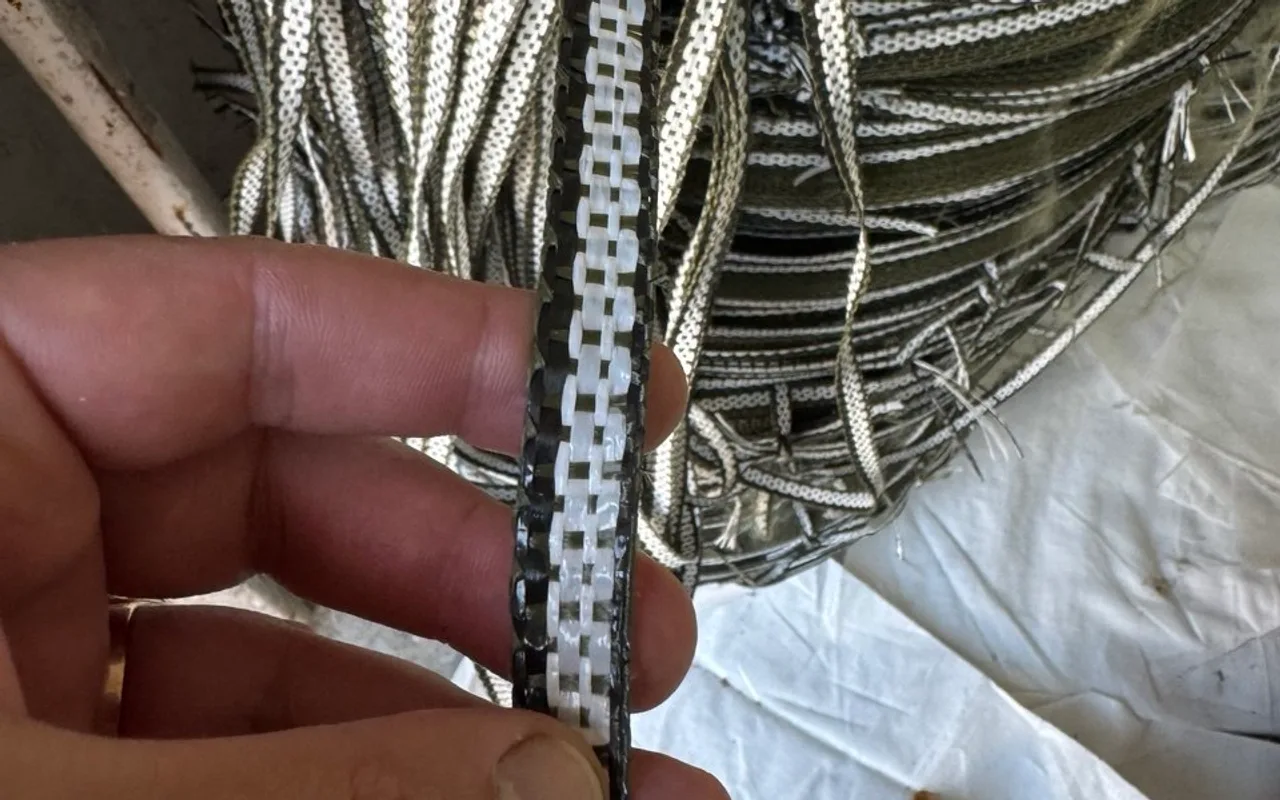
Requirements for polypropylene fabric: tensile strength, UV resistance, density. The fabric must retain at least 50% of its strength after 200 hours of UV exposure.
Construction
Requirements for seams (double chain stitch), lifting loops (min. width, attachment type), bottom, and top. Loops must withstand the load without deformation.
Testing
6 mandatory types of tests: top lift, topple, stacking, drop, tear resistance, and righting/cyclic top lift (for reusable bags).
Labeling
Mandatory information on the label: manufacturer's name, SWL, safety factor, production date, material, tare weight, handling recommendations.
Safety Factor (SF): 5:1 and 6:1
This is the most critical parameter of a big bag from a safety perspective. The Safety Factor (SF) indicates how many times the destructive load exceeds the nominal one (SWL — Safe Working Load).
SF 5:1 — single trip
A big bag with a SWL of 1000 kg and SF 5:1 will withstand a load of 5000 kg during destructive testing. Designed for one transport cycle. After unloading, the container is disposed of.
SF 6:1 — multiple trip
A big bag with a SWL of 1000 kg and SF 6:1 will withstand 6000 kg during destructive testing. Designed for 2–3 full transport cycles. An additional requirement is a cyclic top lift test.
SWL (Safe Working Load) is the figure you see on the label. For example, 'SWL: 1000 kg, SF: 5:1' means: nominal load capacity is 1000 kg, the container will break at a load of ~5000 kg. The 400% margin is protection against dynamic loads during crane lifting, swaying, and uneven weight distribution.
What happens if overloaded? A big bag will not burst immediately if the SWL is exceeded by 10–20%. However, regular overloading accelerates the degradation of the fabric and loops, especially under UV radiation and temperature fluctuations. The consequence is an unpredictable tear during the next lift. Therefore, exceeding the SWL is strongly discouraged.
Types of standard tests
ISO 21898 defines six mandatory tests that every big bag must pass before mass production:
| Test | What it tests | Conditions |
|---|---|---|
| Top Lift | Strength of loops and their attachment to the container body | Load = SWL × SF, hold for 5 minutes |
| Topple Test | Resistance to tipping over from a height of 0.8 m | A container filled to SWL is toppled onto its side |
| Righting Test | Bottom strength when lifting a filled container by the base | The container is lifted by the bottom using a forklift |
| Tear Resistance | Propagation of fabric tear upon puncture or cut | Controlled cut + load |
| Stacking | Ability to withstand the weight of other big bags on top | Top load = weight of 3 identical big bags |
| Cyclic Top Lift (only SF 6:1) | Strength after several cycles of use | Reloading and lifting after the first cycle |
Labeling requirements for big bags
Every big bag complying with ISO 21898 must have a label or printed marking with the following information:
- ✔Manufacturer's name and address
- ✔SWL (Safe Working Load) in kilograms
- ✔Safety Factor: 5:1 or 6:1
- ✔Material of the container body and loops
- ✔Production date (month and year)
- ✔Empty container mass (tare)
- ✔Marking 'for single-trip' or 'for multiple-trip' use
- ✔Instructions for safe lifting and stacking
Practical tip: upon receiving a batch of big bags, check for the presence of all items on the label. The absence of SWL marking or safety factor is a sign of uncertified production. Such containers create a risk of accidents and can be grounds for an insurance company's refusal to pay.
Why certification matters to the buyer
A big bag weighing 1–2 tons lifted by a crane to a height of several meters is a potentially hazardous object. A container tearing during a lift threatens:
- ✔Injuries to workers at the facility or warehouse
- ✔Loss of cargo worth significant amounts
- ✔Territory contamination (especially for chemicals)
- ✔Legal liability for workplace accidents
- ✔Refusal by the insurance company to cover losses (if the packaging is not certified)
For export shipments, ISO 21898 certification is often a mandatory buyer requirement. European and Middle Eastern importers of grain, fertilizers, and chemical products do not accept cargoes in uncertified packaging.
Frequently Asked Questions
Looking for a reliable supplier? UkrBagPak is a Ukrainian manufacturer since 2014. Buy big bags wholesale from the manufacturer directly, without intermediaries. 150+ FIBC models in stock: 2- and 4-loop, with valves, liners, from 500 to 3000 kg. ISO 21898 certified, 1-day shipping across Ukraine.
What does 5:1 and 6:1 mean on a big bag label?
This is the Safety Factor. 5:1 means the container withstands a load 5 times greater than the nominal one — for single-trip use. 6:1 — 6 times greater — for multiple trips (2–3 cycles).
Is ISO 21898 certification mandatory in Ukraine?
Legally — no, ISO 21898 is not mandatory in Ukraine. However, it is an industry standard adhered to by all serious manufacturers. Large buyers (agricultural holdings, chemical plants, exporters) require ISO compliance as a purchasing condition.
How to check if a big bag complies with ISO 21898?
Check the label: SWL, safety factor, manufacturer, and production date must be indicated. Ask the supplier for a test report and a certificate of conformity. Reliable manufacturers provide these documents upon request.
What is the difference between ISO 21898 and the Ukrainian DSTU?
ISO 21898 is an international standard. In Ukraine, DSTU ISO 21898:2008 applies, which is a direct translation of the international standard. The requirements are identical. In practice, manufacturers refer more often to ISO as it has international recognition.
If you need official compliance documentation, order ISO 21898 certified FIBC containers directly from the manufacturer, not from a reseller. UkrBagPak provides a complete document package — quality passports, ISO 21898 certificates and technical specs for every batch.