


What determines the price of a big bag: 8 factors

The question 'how much does a big bag cost?' has no single answer. The price difference between the simplest and the most fully equipped container can be 3–4 times. Below are 8 specific parameters, each of which moves the price up or down.
Size and load capacity
The larger the container, the more fabric, threads, and loop material it takes. A 500 kg big bag (75×75×100 cm) requires ~3.5 m² of fabric. A 2000 kg one (100×100×165 cm) requires ~6.3 m². The difference in material is almost twofold.
Number of loops: 2 or 4
A 4-loop big bag is 15–25% more expensive than a 2-loop one. The reason: more loop material, more complex sewing technology (4 attachment points instead of 2), higher load capacity.
Fabric density (g/m²)
Standard density is 160–180 g/m². Increased density is 200–220 g/m². The price difference is 10–15%. Denser fabric is needed for heavy abrasive materials (crushed stone, ore) and for multiple-trip use.
Spouts: filling and discharge
Flat bottom + open top is the cheapest option. Every spout (filling on top, discharge on the bottom) adds to the price. A container with both spouts can cost 20–30% more than the basic one.
Polyethylene liner
Adding an internal PE liner increases the cost. The liner thickness (60, 80, 100, 150 microns) and its type (loose, gusseted, form-fit) also matter. Form-fit is the most expensive, but the most effective.
Safety factor: 5:1 vs 6:1
A big bag with SF 6:1 (multi-trip) is 10–20% more expensive than an SF 5:1 (single-trip) one. SF 6:1 requires denser fabric, reinforced seams, and loops. If you plan 2–3 cycles, 6:1 pays off.
Printing and branding
Applying a logo (1–4 colors) via flexography adds to the price. One color is a minimal surcharge. Four-color printing on all sides is more substantial. The minimum batch for printing is 500–1000 pcs.
Order volume
The wholesale price can be 15–30% lower than retail. A batch from 500 units usually gives the best price per unit. When ordering 50–100 pcs, the price will be higher due to fixed production setup costs.
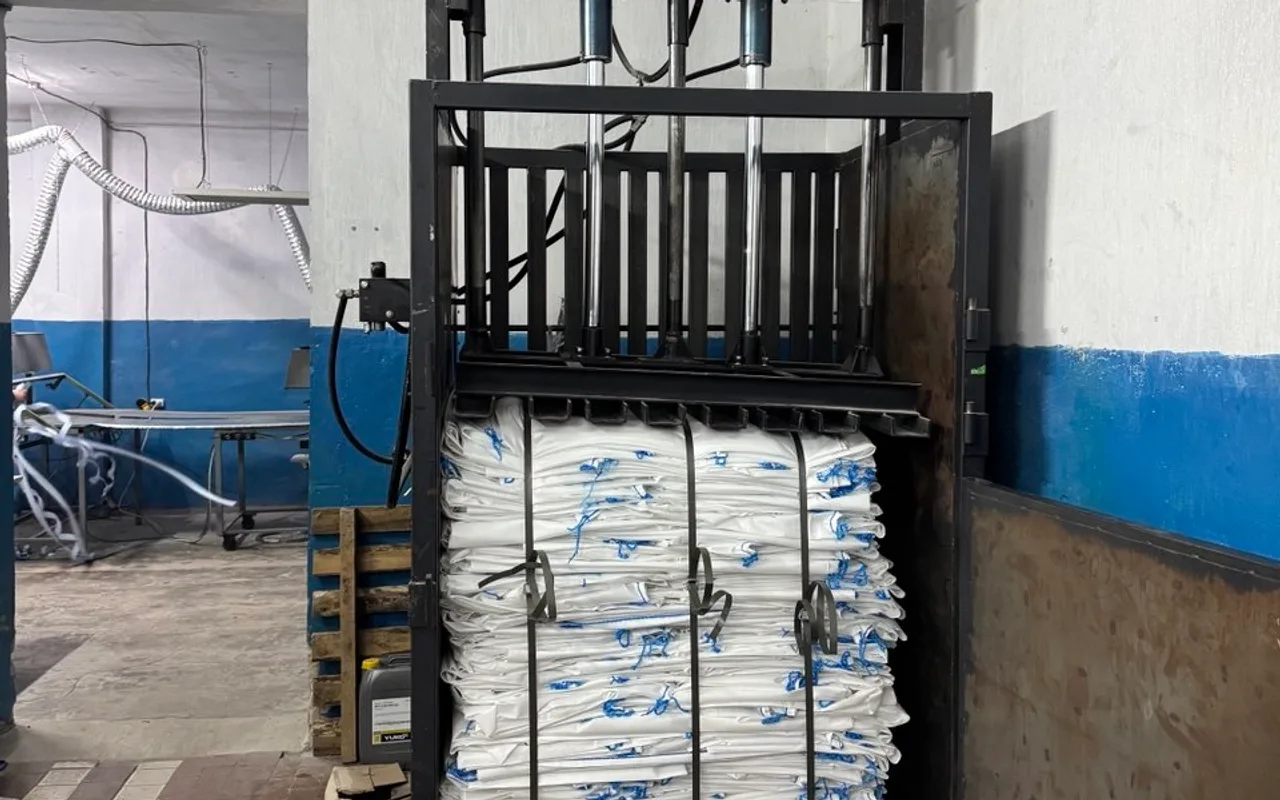
Summary table of price impact
| Factor | Cheaper option | More expensive option | Difference |
|---|---|---|---|
| Loops | 2-loop | 4-loop | +15–25% |
| Fabric | 160 g/m² | 220 g/m² | +10–15% |
| Spouts | No spouts | Top + bottom | +20–30% |
| Liner | No liner | Form-fit 100 µm | +15–25% |
| Safety Factor | 5:1 | 6:1 | +10–20% |
| Printing | No printing | 4 colors | +5–15% |
| Batch | 1000+ pcs | 50 pcs | +15–30% |
How to save money without losing quality
- ✔Determine the real need: if the load is up to 1000 kg and without stacking, a 2-loop SF 5:1 is sufficient
- ✔A liner is not always needed — for dry materials in an indoor warehouse, you can do without it
- ✔Increase the batch — the difference between 50 and 500 pcs is significant
- ✔Spouts — only if really needed for your process
- ✔Buy directly from the manufacturer — no intermediary or distributor markups
Frequently Asked Questions
Looking for a reliable supplier? UkrBagPak is a Ukrainian manufacturer since 2014. Buy big bags wholesale from the manufacturer directly, without intermediaries. 150+ FIBC models in stock: 2- and 4-loop, with valves, liners, from 500 to 3000 kg. ISO 21898 certified, 1-day shipping across Ukraine.
Why do big bags from different manufacturers cost differently?
The difference is usually in fabric density, loop quality, UV stabilization, and ISO certification. A cheaper big bag may have 120 g/m² fabric instead of 180 — visually unnoticeable, but critical for safety under load.
What is cheaper: single-trip 5:1 or multi-trip 6:1?
Single-trip is cheaper per unit (by 10–20%). But if you plan 2–3 cycles, multi-trip 6:1 is more profitable in total: 1 container 6:1 replaces 2–3 containers 5:1.
Does color affect the price?
Standard white is the cheapest. Colored polypropylene (green, blue, beige) costs 5–10% more due to pigment added to raw materials. Ordered in batches from 500+ pcs.
Want to find out current wholesale big bag prices for your specific volume and design? Leave a request on our site — a manager will run the numbers, factor in all 8 cost drivers described above, and come back with the best option within an hour.